
Helping Horses Feel
More comfortable in their bodies.
Bodywork guided by observation,
experience, and the horse's response.
Supporting how your horse moves,
feels, and performs in everyday life.
Better Movement Starts Here.
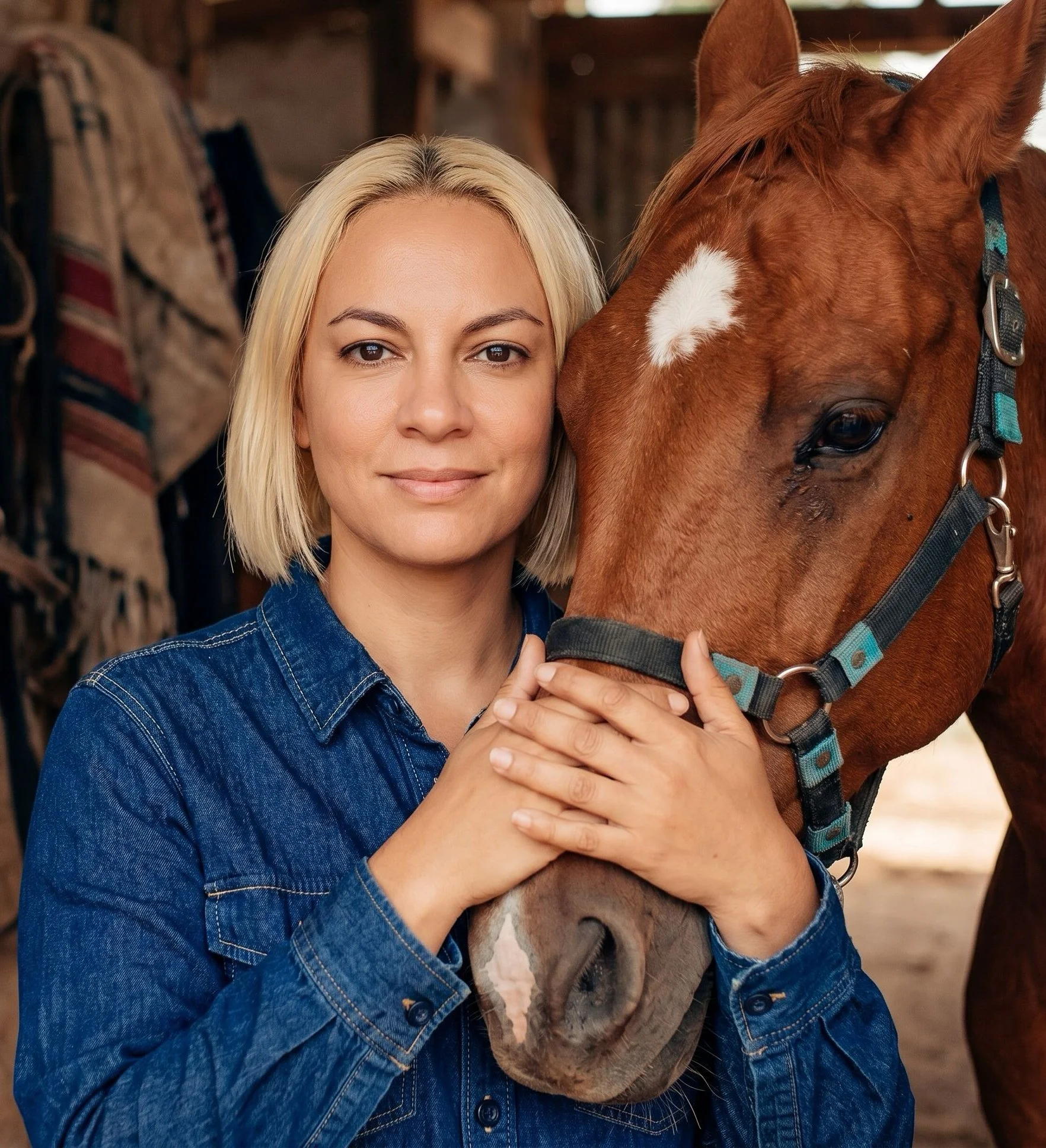
Hi, I’m Caroline
I’ve loved horses for as long as I can remember. Their strength, sensitivity, and quiet way of communicating continue to inspire both my life and my work.
Based in Southern Oregon, I help horse owners understand what they’re seeing in their horse’s body.
My approach combines careful observation with hands-on fascial bodywork to explore patterns of tension, compensation, and adaptation within the body. Often, the concern we notice first is only part of a larger story. By listening to what the horse presents and working layer by layer, it becomes possible to uncover the underlying patterns that may be influencing how the horse moves and carries itself.
Because when we better understand what a horse is communicating, we can better support them in the work and life we ask of them.
Bodywork Services
Structural Integration
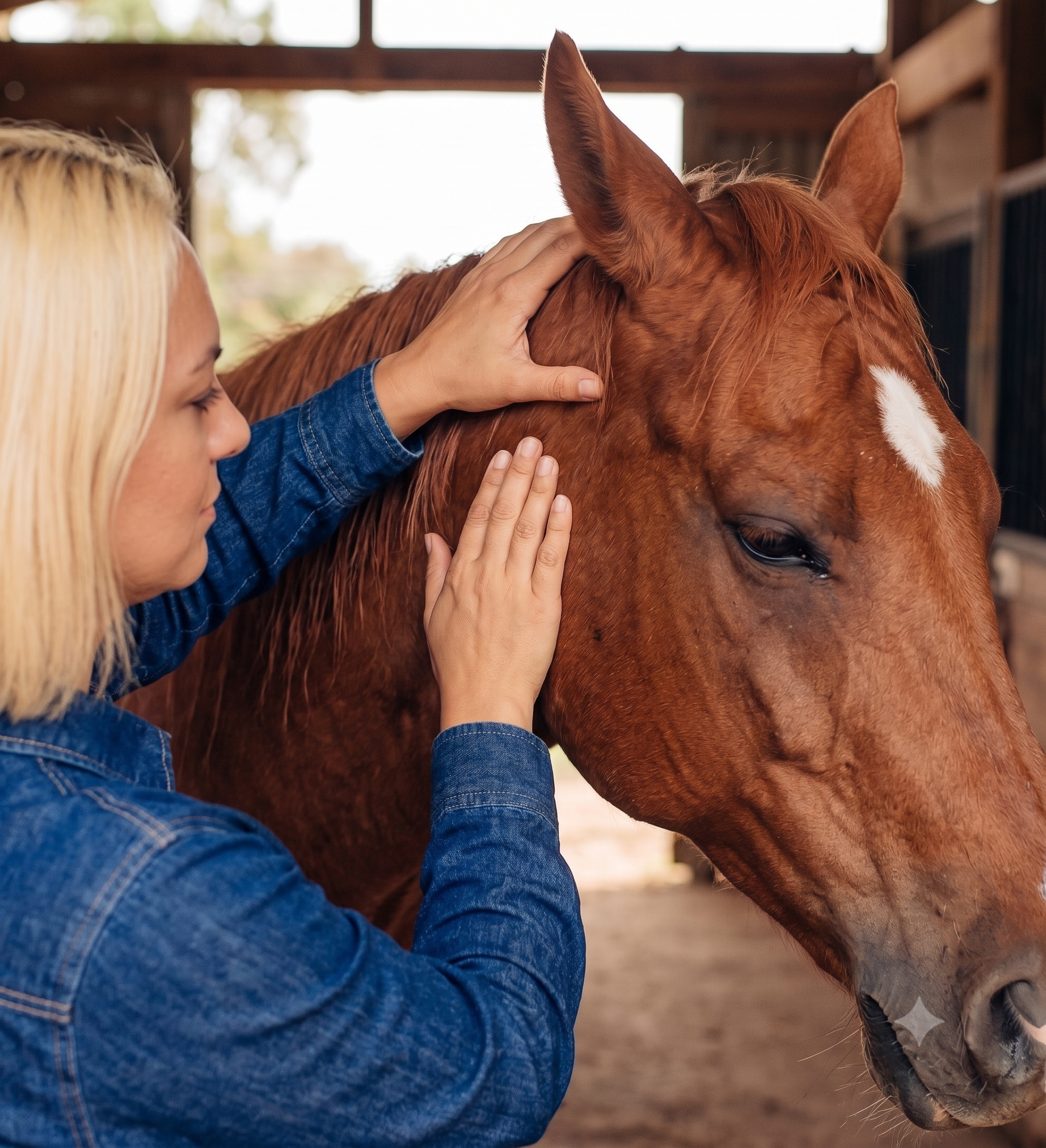
Structural Integration is a form of soft tissue bodywork that focuses on the connective tissue system (fascia) and how the body organizes movement, posture, and balance as a whole.
The work is designed to support more efficient movement patterns, improved soft tissue mobility, and reduced compensatory holding patterns over time. Sessions are typically offered as a progressive process, allowing the horse to adapt and integrate changes gradually through the body.
What Happens in a Session
Each session begins with a brief assessment of the horse in stance and movement. This may include observing how the horse stands, walks, and organizes itself through the body. From there, hands-on fascial and soft tissue work is introduced in response to what the horse presents. The pace, pressure, and focus are guided by the horse’s feedback throughout, rather than a fixed sequence or predetermined routine.
As the session unfolds, attention is given to changes in posture, movement quality, and fascial response within the body. Work is adjusted in real time based on how the horse is processing and responding.
Following the session, a written summary is provided outlining observations, areas of tension or compensation, and notes on how the horse responded. This has historically also included simple side-by-side visual mapping of the horse to track patterns and changes over time.
“Caroline’s intuitive and gentle nature made it easy for my horses, Whiskey and Annabelle, to trust her from the first day they met. I rescued both and realized they had significant body tension and restriction. After hearing the sigh of relief from both horses during the first session, I knew that Caroline’s bodywork was giving them a level of ease I hadn’t seen before. I am forever grateful that she has come into my life and my horses’ to support them.”
— Linda, Owner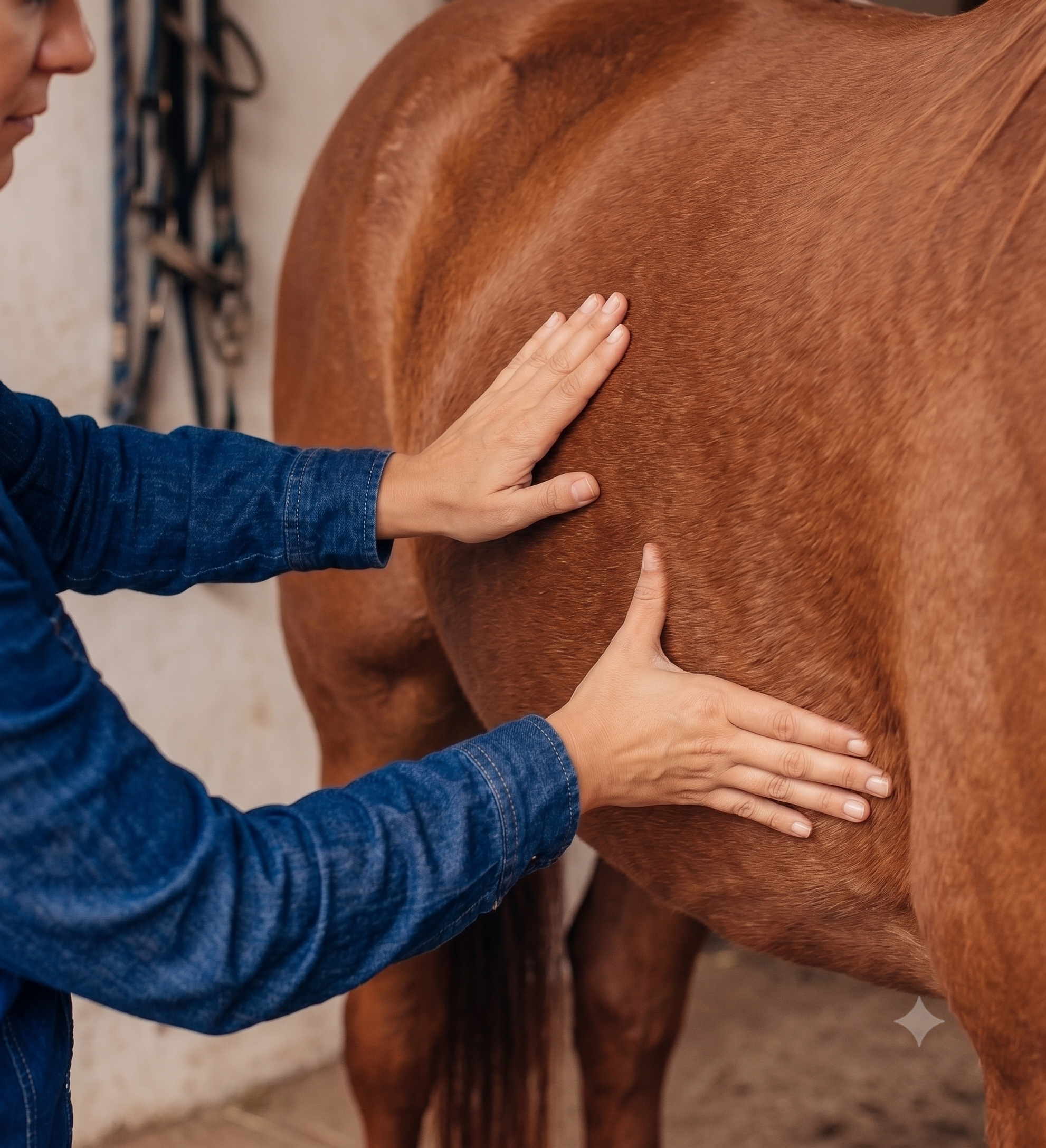
When Bodywork Makes Sense
Supporting Horses Through the Demands of Work and Life
Many horses benefit from bodywork even when there is no obvious injury or specific “problem” present.
Changes in movement, posture, or willingness under saddle are often the first signs that a horse is adapting to tension or compensation patterns within the body.
You may notice things like unevenness between directions, differences in how the horse uses its body on circles or straight lines, resistance in transitions, or a general change in fluidity and responsiveness.
In many cases, what shows up on the surface is connected to deeper patterns of organization through the body. Supporting these patterns can help the horse move with greater ease and consistency over time.
Let’s Talk About Your Horse
“The quieter you become, the more you can hear.”
— Ram Dass